
Water as an Information Carrier
From Masaru Emoto to Modern Water Research
Water is the foundation of our lives. From the perspective of classical chemistry, it is simply H₂O, a compound made up of two hydrogen atoms and one oxygen atom. But the deeper we delve into the biology and physics of this element, the more fascinating it becomes. In many respects, it behaves anomalously and breaks numerous physical rules that other liquids adhere to.
One of the most exciting and at the same time most debated questions in extended water research is: Does water have a memory? Can it absorb, store, and pass on information from its environment? To get to the bottom of this question, it is worth taking a look at the popular pioneers of this idea and where modern science stands today.
The Pioneer of Water Crystals: Masaru Emoto’s Vision
When it comes to the topic of water and information, one name inevitably comes to mind: Dr. Masaru Emoto. The Japanese researcher brought an idea to public attention in the 1990s that fascinated millions of people worldwide.
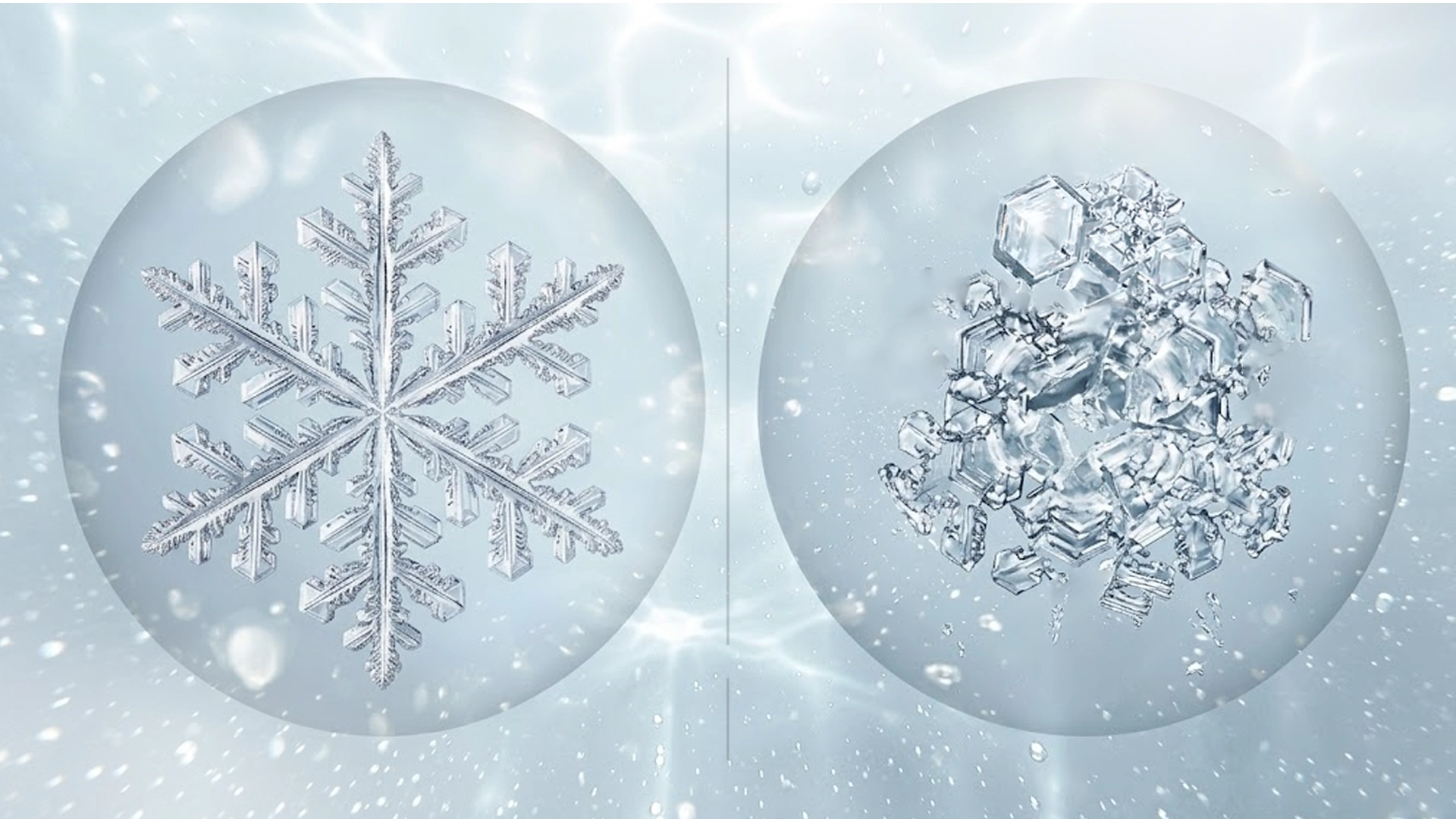
Emoto froze drops of water and photographed the resulting ice crystals under a microscope. His premise was as simple as it was revolutionary: he claimed that water responds to external influences, emotions, and even written words.
- Water crystals labeled with terms such as “love” or “gratitude,” or exposed to classical music, displayed harmonious, complex, and beautifully geometric forms according to Emoto.
- Water confronted with negative words or disharmonious sounds showed chaotic, incomplete, and asymmetrical structures.
Emoto’s images traveled around the world and created an entirely new awareness of how sensitively water may respond to vibrations and resonances.
The Skepticism of Classical Research
We do not want to deny that classical science has met Emoto’s work with great skepticism. From the perspective of strict methodology, there were no independent double-blind studies, and the reproducibility of his results was often questioned. Critics noted that crystal formation depended heavily on temperature, humidity, and the subjective selection of the most beautiful photos.
But even if one considers Emoto’s work purely as a metaphorical or philosophical work of art, it has achieved something decisive: it has opened our eyes to the fact that water is not a dead, rigid substance. It is a dynamic, interactive medium. And this is exactly where modern, reputable biophysics comes in.
Modern Water Research: Structure in Focus
When we leave the level of ice crystals and move to the molecular level, we do indeed find mechanisms that come remarkably close to a “memory” or to information transfer.
Classical physics knows that H₂O molecules, through so-called hydrogen bonds, join together into networks, known as clusters, at lightning speed. These structures change in fractions of picoseconds. Yet newer branches of research show that water is certainly capable of forming higher-level, more stable structures:
The Stuttgart Water Droplets
At the Institute of Statics and Dynamics of Aerospace Structures at the University of Stuttgart, astonishing observations were made for decades under the direction of Prof. Dr. Bernd Kröplin. The researchers let water droplets dry and examined the remaining structures under the dark-field microscope. The result: the structure of the dried droplet changed significantly depending on which person had previously poured the water into the glass or to which environmental influences, such as electromagnetic fields or even flowers placed in the water, it had been exposed. The water seemed to produce a specific, physical image of its surroundings.
The Fourth State of Matter
The work of bioengineer Prof. Gerald Pollack from the University of Washington is also currently revolutionizing our understanding. He discovered the so-called Exclusion Zone (EZ water). At hydrophilic, that is water-loving, surfaces, such as those found everywhere in our cells, water reorganizes itself. It takes on a liquid-crystalline form that chemically corresponds more closely to the formula H₃O₂. This layer filters out impurities, stores energy from light, and essentially acts like a tiny biological battery.
What Does This Mean for Our Drinking Water?
If we acknowledge that water is capable of forming physical structures and of responding to environmental influences, electromagnetic fields, or surfaces, the topic of water quality takes on a completely new dimension.
It is no longer enough to simply remove pollutants from water chemically at the treatment plant. We must ask ourselves what structural “memories” the water carries with it when it:
- is forced under high pressure through kilometers of unnaturally straight pipes.
- flows past residues of medicines or heavy metals.
- is exposed to constant unnatural frequencies.
Seen from this perspective, it becomes clear why more and more people revitalize or structure their purified water in the final step, for example through vortexing, as we discussed in a previous article. The aim is to restore the water’s natural, ordered, and vital structure, which it so urgently needs for our cellular health.
Water is and remains a mystery, but the closer we look, the clearer it becomes: it responds to the world in which it flows.